Is Quartz Better Than Granite?
Discover whether quartz or granite is better for your kitchen. Compare cost, durability, maintenance, heat resistance, and style to choose the right countertop.
Is Quartz Better Than Granite? A Complete Countertop Comparison Guide
When choosing kitchen countertops, the quartz vs. granite debate is one of the most common dilemmas homeowners face. Both materials offer exceptional durability and timeless appeal, but they differ significantly in composition, maintenance, cost, and performance.
In 2026, quartz remains the top choice for homeowners seeking low-maintenance, stain-resistant durability with a sleek, consistent aesthetic. Granite continues to win favor among those who prioritize heat resistance, want 100% natural stone with unique organic movement, and don't mind annual sealing.
According to industry surveys, roughly 78% of design professionals expect quartz to be the preferred countertop surface in the coming years, while granite use, though still strong, is projected to narrow.
This comprehensive guide breaks down the key differences between quartz and granite to help you decide which material is better for your kitchen, lifestyle, and budget.
What Is Quartz?
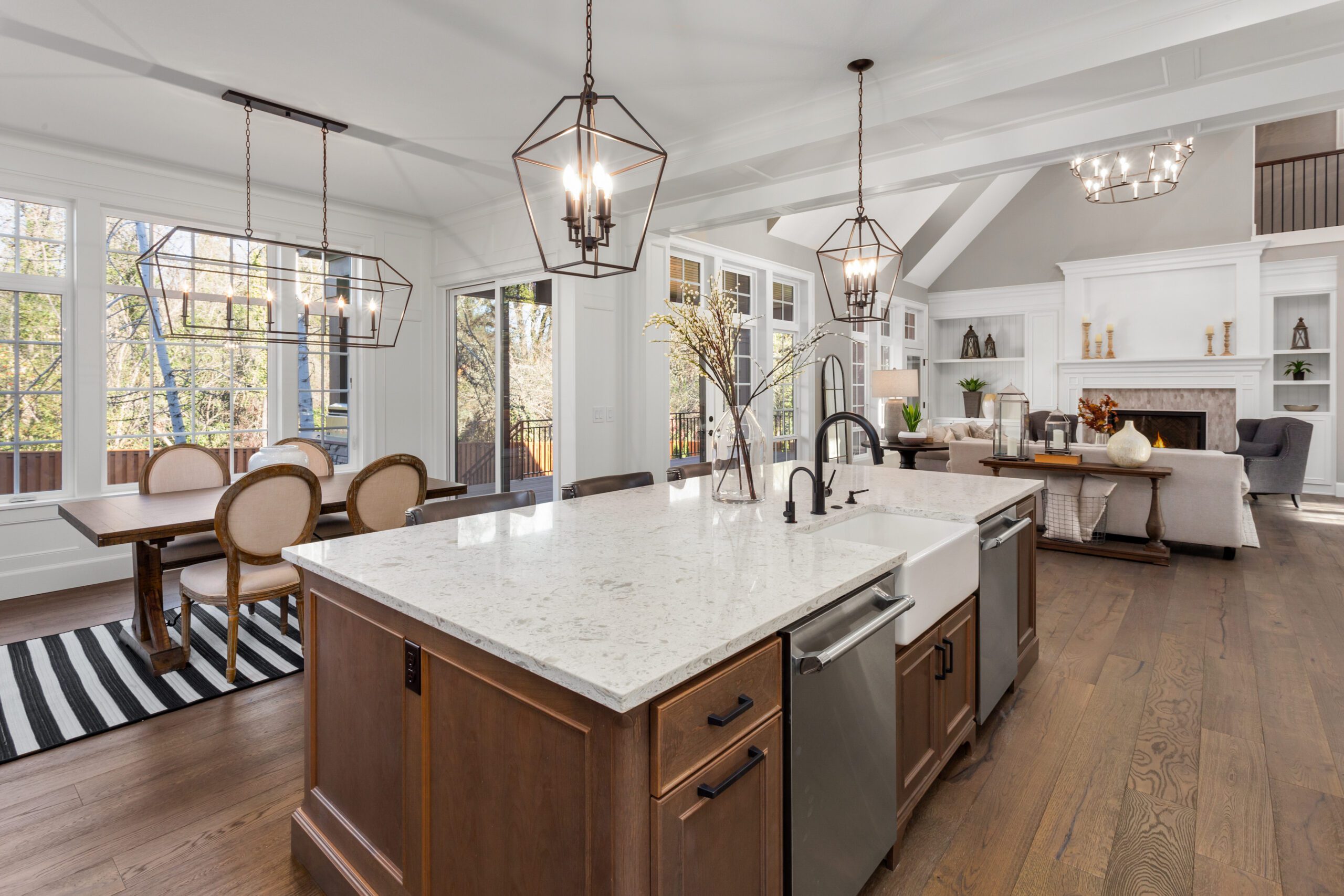
Quartz countertops are engineered stone products made from approximately 90–95% crushed quartz crystals mixed with resins and pigments. This manufacturing process creates a non-porous, highly durable surface with consistent patterns and colors.
Key Characteristics of Quartz
- Composition: Engineered stone (mostly quartz plus resins and pigments).
- Appearance: Uniform, consistent patterns with endless color options.
- Porosity: Non-porous surface that resists stains, bacteria, and moisture.
- Maintenance: No sealing required; simple soap-and-water cleaning.
- Durability: Highly resistant to scratches, chips, and cracks.
- Heat Resistance: Moderate; can be damaged by extreme heat above about 300°F.
- UV Resistance: Not ideal for outdoor use; prolonged sun exposure can discolor resin.
What Is Granite?
Granite countertops are slabs of 100% natural stone quarried directly from the earth, then cut, polished, and fabricated into countertops. Each slab features unique patterns, colors, and veining that cannot be replicated.
Key Characteristics of Granite
- Composition: 100% natural quarried stone.
- Appearance: Unique, organic patterns with no two slabs alike.
- Porosity: Naturally porous and requires regular sealing to resist stains.
- Maintenance: Needs periodic resealing; gentle cleaners recommended.
- Durability: Excellent scratch and heat resistance; can crack under extreme temperature changes.
- Heat Resistance: High; suitable for hot pots and pans when used sensibly.
- UV Resistance: Performs well outdoors; not prone to resin-based discoloration.
Quartz vs. Granite: Head-to-Head Comparison
Understanding the key differences helps you make an informed decision based on your priorities.
|
Feature |
Quartz (Engineered Stone) |
Granite (Natural Stone) |
|
Composition |
Engineered quartz + resins |
100% natural stone |
|
Appearance |
Uniform, consistent patterns |
Unique, organic veining |
|
Cost (installed) |
~$55–$120 per sq. ft. |
~$50–$100 per sq. ft. |
|
Maintenance |
No sealing; simple cleaning |
Requires sealing every 1–5 years |
|
Scratch/chip resistance |
Very high; slightly harder than granite |
Very high; edges can chip under impact |
|
Heat resistance |
Moderate; avoid high heat |
High; handles hot cookware better |
|
Stain resistance |
Superior; non-porous |
Good if sealed; porous unsealed |
|
Bacteria resistance |
Excellent; non-porous |
Good when sealed |
|
Color range |
Very wide; stone-look and solid colors |
Limited to natural variations |
|
Outdoor suitability |
Not recommended |
Suitable with proper installation |
|
Design vibe |
Sleek, contemporary |
Natural, timeless |
Cost Comparison: Quartz vs. Granite
Costs overlap but can diverge depending on quality, brand, and slab selection.
Quartz Costs
- Standard materials: roughly $50–$75 per sq. ft.
- Premium designer colors: can exceed $100–$150 per sq. ft.
- Installed averages: about $55–$120 per sq. ft., including fabrication and installation.
Granite Costs
- Common colors: typically $50–$80 per sq. ft. installed.
- Exotic stones: can reach or exceed $150–$200 per sq. ft.
- Installed averages: about $50–$100 per sq. ft. for most projects.
Long-term, quartz can be more cost-effective because it eliminates the recurring expense of sealing required with granite.
Durability and Everyday Performance
Both materials are considered "lifetime" surfaces under normal use.
Quartz Durability
Quartz is extremely hard and more resistant to chips and surface damage than granite.
- Quartz countertops are more resistant to chips and surface damage, especially around edges.
- Quartz is actually harder than granite and thus more durable.
- Engineered composition reduces natural fissures that can lead to cracks.
Granite Durability
Granite offers excellent durability but is still a natural material with inherent variations.
- Granite delivers strong scratch resistance and handles heavy daily use well.
- Granite can crack and be weakened over time by changes in temperature or if installed over uneven support.
- Edges and corners are more susceptible to chips from dropped heavy objects.
Maintenance Requirements
Maintenance is one of the biggest practical differences between quartz and granite.
Quartz Maintenance
- No sealing required at any point.
- Daily cleaning with mild soap and water is sufficient.
- Non-porous surface resists stains from coffee, wine, oils, and acidic foods.
- Highly resistant to bacteria and mold growth due to its non-porous nature.
Granite Maintenance
- Requires sealing every 1–5 years depending on use and product quality.
- Unsealed granite can absorb liquids, leading to staining and potential bacteria growth.
- Cleaning with pH-neutral, non-abrasive products is recommended to avoid etching.
Quartz clearly wins for homeowners seeking "install it and forget it" simplicity.
Heat Resistance: Quartz vs. Granite
Heat performance is one area where granite maintains an advantage.
Quartz Heat Resistance
Quartz can tolerate moderate heat but is vulnerable to extreme temperatures.
- Quartz countertops are more resistant to chips, but perform less well under high heat.
- Direct exposure to very hot pans (above about 300°F) can cause discoloration or cracking.
- Trivets and hot pads are strongly recommended for quartz surfaces.
Granite Heat Resistance
Granite handles heat better than quartz.
- Granite surfaces can withstand hot pots and pans placed briefly on the countertop.
- Granite's natural mineral composition gives it excellent heat tolerance.
- Extreme thermal shock (e.g., ice-cold followed by very hot) can still crack granite, so basic care is advised.
For serious cooks who routinely move hot cookware directly from the stovetop or oven, granite is generally safer.
Lifespan of Quartz vs. Granite Countertops
Both materials are designed to last for decades, but their practical lifespans depend on use and care.
What Is the Lifespan of Quartz Countertops?
Modern quartz countertops are engineered as long-term surfaces and routinely last several decades under normal household use.
- Quartz countertops are highly durable and scratch resistant, and they don't require resealing, which contributes to an extended lifespan.
- Manufacturer warranties on quartz frequently range from 10 to 25 years, reflecting confidence in long-term performance.
- In a typical residential kitchen, well-maintained quartz can reasonably be expected to last 25–30+ years without needing replacement, barring major impacts or extreme heat damage.
Because quartz is non-porous, it maintains its stain resistance and hygienic surface for the duration of its life without additional treatments.
What Is the Lifespan of Granite Countertops?
Granite is also considered a "lifetime" material and can last for generations with proper sealing and care.
- Granite countertops are extremely durable and can last 30–50 years or more in residential kitchens when properly sealed and maintained.
- Many stone specialists view granite as a "once-per-house" installation if the homeowner maintains sealing and avoids extreme abuse.
- Over time, improper sealing or harsh cleaners can dull the finish, but the stone itself remains structurally sound and can often be refinished or re-polished if needed.
In practice, both quartz and granite usually outlast cabinetry and appliances, meaning replacement is more often driven by style changes than by material failure.
Stain and Bacteria Resistance
For kitchens where food preparation and hygiene are priorities, stain and bacteria resistance are critical.
Quartz Stain and Bacteria Resistance
- Non-porous surface prevents liquids and bacteria from penetrating.
- Highly resistant to stains from common kitchen substances like wine, coffee, and oil.
- Excellent choice for families concerned about food safety and easy cleanup.
Granite Stain and Bacteria Resistance
- Porous when unsealed; can absorb liquids and harbor bacteria.
- When properly sealed, granite offers good resistance to stains and bacteria, but requires ongoing maintenance.
- Food safety is reliable if homeowners keep up with sealing and use appropriate cleaners.
For worry-free hygiene and stain resistance, quartz is the safer choice.
Aesthetic Differences: Style and Design
The visual character of your countertop influences the entire kitchen design.
Quartz Aesthetics
- Offers uniform, controlled patterns and a wide range of colors, including convincing marble and granite lookalikes.
- Ideal for modern, contemporary, and transitional kitchens where consistency is desired.
- Some homeowners feel quartz can look "too perfect" or slightly artificial compared with natural stone.
Granite Aesthetics
- Offers unmatched natural variation, with unique veining and mineral patterns.
- No two granite slabs are identical, making each installation one of a kind.
- Strong choice for traditional, rustic, or organic-inspired designs that celebrate natural materials.
The aesthetic decision is largely about whether you prefer the consistency of engineered quartz or the individuality of natural granite.
Environmental Considerations
Sustainability and environmental impact are increasingly important in material selection.
Quartz
- Uses abundant quartz materials but incorporates petroleum-based resins.
- Manufacturing processes can generate silica dust, requiring strict worker safety standards.
- Engineered production allows efficient use of raw materials and controlled waste.
Granite
- Requires quarrying, which is energy-intensive and alters landscapes.
- Heavy slabs increase transportation emissions due to weight.
- 100% natural material with no synthetic resins or binders.
Overall environmental impact can be similar; the "greener" choice depends on how heavily you weigh quarrying vs. resin-based manufacturing and transport.
Pros and Cons Summary
Quartz Pros
- Non-porous and highly stain resistant.
- No sealing or special maintenance required.
- Highly durable and scratch resistant; more resistant to chips than granite.
- Consistent patterns and a wide range of colors and stone-look designs.
- Superior bacteria resistance and food safety.
Quartz Cons
- Sensitive to extreme heat; hot pans can damage or discolor the surface.
- Not ideal for outdoor use due to UV sensitivity.
- May appear less "natural" than stone to some homeowners.
- Generally mid-to-high range in cost compared to some granites.
Granite Pros
- 100% natural stone with unique, organic aesthetics.
- Excellent heat resistance; handles hot cookware better than quartz.
- Strong scratch resistance and long-term durability.
- Suitable for outdoor kitchens and sun-exposed areas.
- Adds premium, timeless appeal that many buyers recognize.
Granite Cons
- Requires periodic sealing to maintain stain resistance and hygiene.
- Can absorb liquids and stain if not sealed properly.
- Edges can chip and slabs can crack under extreme temperature or stress.
- Color and pattern choices are limited to what exists in nature.
Which Is Better for Your Kitchen?
There is no universal winner; the best material depends on how you use your kitchen and what you value most.
Choose Quartz If You:
- Want a low-maintenance, no-seal, stain-resistant surface.
- Prefer sleek, consistent patterns or want marble-like looks without maintenance.
- Have a busy household and prioritize hygiene and easy cleanup.
- Are comfortable using trivets for hot pans and careful with extreme heat.
- Want predictable color and pattern that matches a specific design vision.
Choose Granite If You:
- Frequently move hot cookware directly onto countertops.
- Love the look and feel of natural stone and unique veining.
- Don't mind resealing every few years to protect against stains.
- Prefer a kitchen that highlights natural materials and organic variation.
- Plan to extend surfaces to outdoor kitchens or sun-exposed areas.
Frequently Asked Questions
Is quartz better than granite?
Quartz is better if you value low maintenance, stain resistance, and consistent aesthetics. Granite is better if you prioritize heat resistance, natural stone, and are willing to manage sealing. There is no universal "better"—it depends on your priorities.
What is the lifespan of quartz countertops?
With normal residential use, quartz countertops commonly last 25–30+ years and often longer, thanks to their hard, non-porous, low-maintenance surface and strong resistance to scratches and chips. Manufacturer warranties of 10–25 years reflect this long expected lifespan.
What is the lifespan of granite countertops?
Properly sealed and maintained granite countertops can easily last 30–50 years or more in a home kitchen. Granite is a natural stone that remains structurally sound for decades; most replacements are due to style changes rather than wear.
Which is more expensive: quartz or granite?
At entry-level, prices are similar. Mid-range quartz often costs slightly more per square foot than common granite colors, while exotic granite can exceed quartz in price. Long-term costs favor quartz because it eliminates ongoing sealing expenses.
Can you put hot pans on quartz?
It's not recommended. Quartz can be damaged by extreme heat; hot pans may cause scorch marks or cracks. Always use trivets or hot pads on quartz.
Does granite need to be sealed?
Yes. Granite is porous and requires periodic sealing—usually every 1–5 years—to maintain stain resistance and hygiene.
Which surface is more stain resistant?
Quartz is more stain resistant because it is non-porous and never needs sealing. Granite resists stains well when properly sealed but can stain if the sealant is neglected.
Is quartz or granite better for resale?
Both add strong resale value. Buyers increasingly recognize quartz as a premium, low-maintenance option, while granite remains a classic natural stone upgrade. Local market preferences often determine which is more desirable.
Match the Material to Your Lifestyle
Quartz and granite are both excellent choices that can serve your kitchen well for decades. Quartz excels in low-maintenance performance, stain resistance, and consistent contemporary aesthetics. Granite shines in heat resistance, natural beauty, and unique, organic patterns.
If you want a worry-free, durable surface that doesn't require sealing and thrives in busy family kitchens, quartz is likely the better fit. If you love natural stone, cook frequently with hot pots and pans, and don't mind periodic sealing, granite may be your ideal choice.
For kitchen designs that balance function, longevity, and aesthetics, many homeowners now choose quartz for primary work surfaces and incorporate granite or other natural stones as accent areas—combining the strengths of both materials in one cohesive space.