Lighting Design for Aging Eyes
Create a brighter, safer home with Simone Feldman Designs. Explore practical lighting strategies, recommended light levels, and start optimizing visibility and comfort today.
Lighting for Aging Eyes: A Complete Guide
A well-planned lighting design helps older adults see details clearly, move confidently, and reduce eye strain throughout the day. With targeted light levels, glare control, and intuitive controls, your home can better support independence and well-being.
As vision changes with age—reduced contrast sensitivity, increased glare sensitivity, and slower adaptation between light and dark—demand for thoughtful residential lighting has grown. A common question homeowners ask is what a whole-home lighting plan should include to make daily tasks easier and safer.
The answer depends on the room, the tasks performed, color quality, fixture placement, and control systems. Simone Feldman Designs provides expert guidance, translating technical standards into beautiful, easy-to-use lighting solutions tailored for aging eyes.
What Is Lighting Design for Aging Eyes?
Lighting for aging eyes focuses on delivering the right amount of light where it’s needed, reducing glare, and improving contrast so details are easier to see without strain. The goal is to enhance safety and comfort while maintaining a warm, inviting aesthetic.
Guided by universal design, we combine layered lighting—ambient, task, and accent—with appropriate color temperature and high color rendering (CRI 90+) to make colors and edges more distinguishable. The result is a cohesive look that supports vision at every age.
Core elements often include:
- Ambient lighting that provides even, indirect illumination
- Task lighting at counters, sinks, desks, and reading areas
- Accent lighting to create depth and improve perceived contrast
- Glare control using diffusers, lensing, and shaded fixtures
- Night lighting for safe wayfinding from bedroom to bath
- Smart dimmers and large, high-contrast switches for easy control
Simone Feldman Designs applies these principles to craft lighting plans that look refined and function flawlessly.

Recommended Light Levels by Room and Task
Lighting needs vary across the home. Below are typical foot-candle targets that improve visibility for aging eyes while minimizing glare.
General Living Areas (10–20 foot-candles)
Provide uniform ambient light with dimming to reduce shadows. Add reading lamps delivering 30–50 fc at the page and glare-free TV backlighting to ease eye strain.
Kitchens and Dining (30–50 foot-candles)
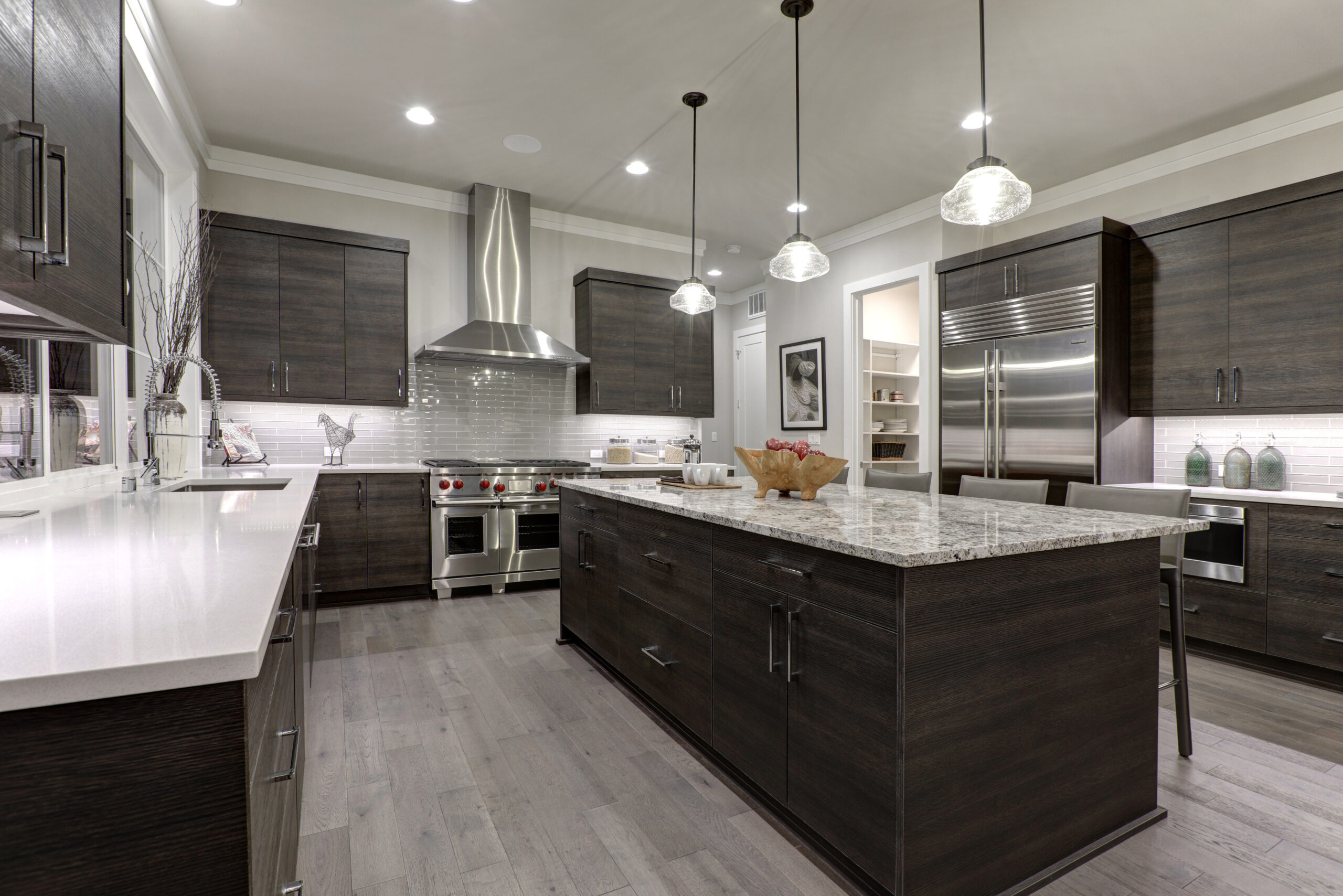
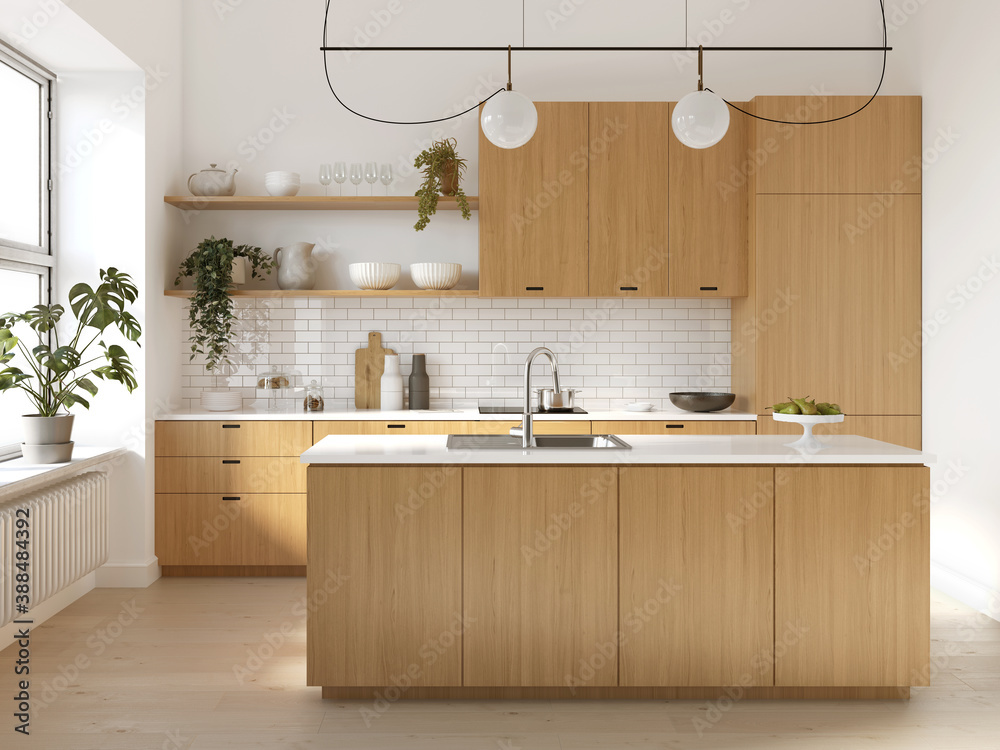
Use under-cabinet task lights to reach 50–75 fc on counters for chopping and reading labels. Keep ambient around 20–30 fc to balance the space.
Bathrooms and Grooming (30–50 foot-candles)
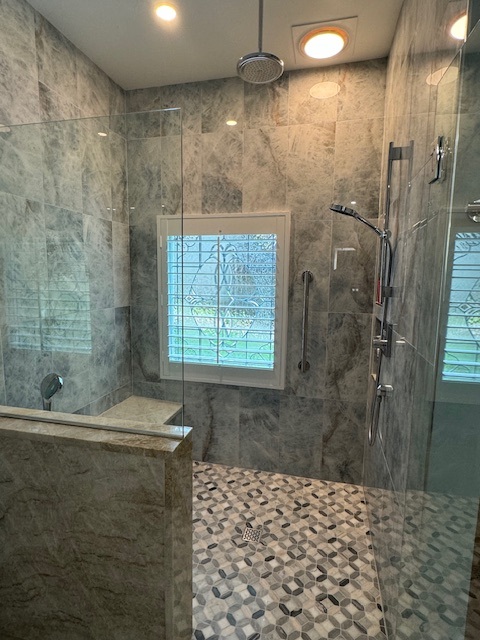
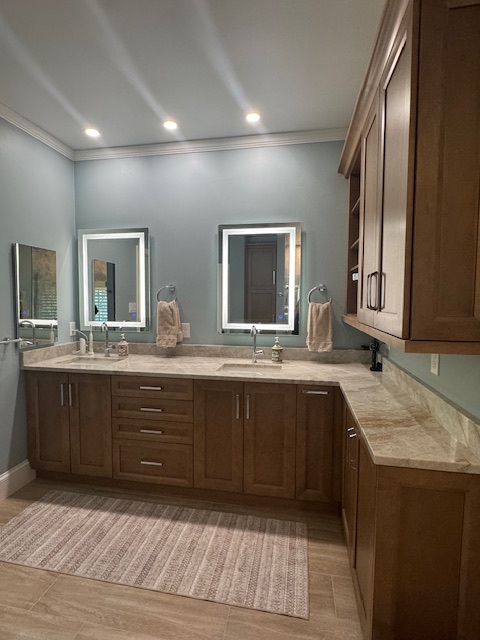
Vertical lighting at the mirror reduces shadows on the face. Target 50 fc at the vanity and 10–20 fc in the shower with diffused fixtures.
Simone Feldman Designs provides space-by-space light level planning so every task is comfortably illuminated.
Key Factors in a Vision-Friendly Lighting Plan
Several elements determine how well a lighting scheme supports aging eyes.
- Layered Approach: Combine ambient, task, and accent lighting to eliminate harsh contrasts and dark corners.
- Glare Management: Choose fixtures with diffusers, indirect optics, and shielding to keep bright sources out of the line of sight.
- Color Quality: Prioritize CRI 90+ and 3000–3500K for accurate color and comfortable warmth without yellowing.
- Controls: Use dimmers, scenes, and motion sensors to adapt light levels throughout the day with minimal effort.
- Placement: Position lights to avoid reflective glare on counters, glossy floors, and screens.
Simone Feldman Designs helps homeowners balance these factors for clarity, comfort, and style.
Bathroom and Night Lighting Strategies
Bathroom lighting should reduce shadows and prevent glare from shiny surfaces. Good vertical light at the mirror and diffused fixtures in the shower improve comfort and safety.
Helpful upgrades include:
- Even, vertical sconces at eye level on both sides of the mirror
- Low-glare, diffused overhead lighting to reduce reflections
- Nightlight pathways with motion sensors from bedroom to bath
- High-contrast, large-button dimmers and switches
- 3000–3500K fixtures with CRI 90+ for accurate grooming
In kitchens, under-cabinet task lighting minimizes shadows on prep areas, and matte finishes help cut glare. Smart scenes can shift from bright cooking light to softer dining light with one touch.
Controls and Smart Features That Simplify Use
Controls matter as much as fixtures. Large, backlit switches, preset scene keypads, and voice assistants make adjustments easy. Motion-activated night lighting reduces fall risk without fumbling for switches.
Options include:
- Smart dimmers with large interfaces and high-contrast labels
- Occupancy/vacancy sensors in halls, closets, and bathrooms
- Tunable white or scheduled scenes supporting circadian rhythms
- Battery-free wireless remotes for retrofit locations
- Integration with selected smart home platforms
These upgrades are scalable—from single rooms to whole-home systems—without overcomplicating daily life.
Working With a Specialist Lighting Designer
Partnering with a professional who understands aging eyes is essential. We translate standards for foot-candles, color quality, and glare control into fixtures and controls that fit your home’s architecture.
Our team stays current with industry guidance and proven best practices for vision-friendly design.
Simone Feldman Designs brings technical rigor and design sensitivity to every project, delivering lighting that supports safety, function, and beauty.
Smart Lighting Controls for Aging Eyes
Connected lighting plays a pivotal role in lighting design for aging eyes. Thoughtful controls reduce glare, simplify daily use, and help maintain healthy sleep-wake rhythms.
Effective options include:
- Voice-activated scenes that raise task lights and soften ambient glare
- Automated dimming that shifts to warmer tones in the evening
- Security and entry lights tied to remote monitoring for safe arrivals
- Motion-sensor pathway lights for low-glare nighttime wayfinding
Although smart dimmers and sensors add upfront cost, they deliver lasting benefits through safer navigation, better visibility, and easy, one-touch control.
Lighting Retrofit Considerations
Upgrading a home for aging eyes can reveal issues that impact scope and budget, especially in older properties.
Potential added costs include:
- Updating legacy wiring to support dimmers and LED drivers
- Adding junction boxes for layered ambient, task, and accent lighting
- Extra labor to integrate low-glare diffusers and custom under-cabinet lights
- Electrical code adjustments when adding circuits or arc-fault protection
Building a 10–20% contingency helps manage these discoveries while keeping the lighting plan on track.
Timeline for a Whole-Home Lighting Upgrade
The duration of a lighting design project for aging eyes varies by home size and existing electrical conditions.
Typical phases include:
- Initial consultation with light level testing and glare assessment
- Design and planning of layers, controls, and color temperature
- Fixture, lamp, and control selection with CRI and output targets
- Electrical work, installation, and aiming/commissioning
- Final walkthrough, dimmer programming, and adjustments
Compact upgrades may finish in a few weeks; multi-room plans and rewiring can extend into a few months.
Simone Feldman Designs ensures every step is coordinated for minimal disruption and precise results.
Value of Vision-Friendly Lighting
Investing in lighting design tailored to aging eyes improves daily comfort, reduces falls, and supports circadian health—all while enhancing the home’s appeal.
High-CRI fixtures, thoughtful task lighting, and intuitive controls are attractive to many buyers and elevate overall livability.
Most importantly, better lighting helps homeowners remain confident in their homes without costly relocations.
Why Choose Simone Feldman Designs?
Simone Feldman Designs brings technical expertise and a human-centered approach to lighting for aging eyes, balancing performance, aesthetics, and ease of use.
Our process includes:
- Personalized assessments of tasks, glare sources, and wayfinding
- Transparent proposals with fixture outputs and control options
- Universal design principles applied to switches and interfaces
- Collaboration with licensed electricians and controls specialists
- Fine-tuning light levels and scenes after installation
The result is a well-lit home that feels calm, clear, and beautiful day and night.
Budgeting Tips for Vision-Friendly Lighting
A clear plan helps allocate funds to the lighting features that matter most.
- Prioritize glare control, task lighting, and safe night pathways
- Plan for adjustable light levels to adapt as vision changes
- Reserve funds for electrical updates to support dimmers and drivers
- Include a contingency for unforeseen wiring conditions
- Choose quality, high-CRI fixtures that last and reduce maintenance
Simone Feldman Designs develops budgets that deliver safer, clearer lighting without overspending.
Cost-Saving Strategies
Smart choices can stretch your lighting budget while preserving performance.
- Target high-impact zones first: kitchens, baths, stairs, and entries
- Phase upgrades room by room with a cohesive plan
- Use retrofit LEDs and lens diffusers before opening ceilings
- Select versatile fixtures that serve ambient and task roles
- Work with lighting-aware aging in place specialists
These steps yield meaningful visibility gains while managing costs.
FAQs About Lighting Design for Aging Eyes
How bright should my home be?
General targets are 20–30 foot-candles for living areas, 50–70 for kitchens, 75–100 at countertops and sinks, 30–50 for bedrooms with 1–2 at night for pathways, and 70–100 for bathrooms at mirrors.
What color temperature and CRI work best?
Use 3000–3500K for most rooms to balance clarity and comfort, and select CRI 90+ lamps to improve color accuracy and contrast.
How do I reduce glare?
Choose fixtures with diffusers or frosted lenses, use indirect or wall-wash lighting, avoid bare bulbs, and dim high-output lights to suit the task.
What controls are easiest to use?
Large-button dimmers, high-contrast rockers, voice commands, and motion sensors create simple, reliable control without small screens.
Can my older wiring handle new LEDs?
Often yes, but dimmer compatibility, grounded boxes, and driver loads must be checked. A licensed electrician can add neutral wires or new circuits when needed.
Plan a Safer, Brighter Home
A well-layered lighting plan enhances visibility, supports sleep, and makes everyday tasks easier. Understanding output, color, and controls helps you choose fixtures that serve you now and in the years ahead.
Simone Feldman Designs provides expert assessments, clear recommendations, and seamless installation support. With the right mix of ambient, task, and accent lighting, Simone creates welcoming spaces that are comfortable, intuitive, and easy to navigate.
Our Service Area
Simone Feldman Designs proudly provides Aging In Place design services for homeowners in Alpharetta, Johns Creek, Milton, and Roswell, GA and surrounding communities. With a thoughtful, safety-focused approach, Simone creates kitchens and bathrooms that support long-term comfort, accessibility, and independence without sacrificing style. Whether you’re planning ahead or adapting your current space, each design is tailored to fit your lifestyle and evolve with your needs—so you can remain confident and comfortable in your home for years to come.