Slip-Resistant Bathroom Flooring Guide
Discover how to choose and install safer bathroom floors with Simone Feldman Designs. Explore proven traction ratings, materials, and start your slip-resistant upgrade today.
How to Choose Slip-Resistant Bathroom Flooring: A Complete Guide
Bathrooms stay wet, humid, and busy—conditions that demand flooring engineered for traction without sacrificing style. With the right surface texture, grout strategy, and underlayment, you can create a floor that reduces slips while looking refined and feeling comfortable underfoot.
Homeowners are increasingly prioritizing slip-resistant finishes that perform in both wet and dry conditions. One of the first questions we hear is which materials and specifications deliver true safety in real bathrooms, not just in a showroom.
The answer depends on several factors, including DCOF/COF ratings, tile size and grout joints, surface texture, waterproofing, and the way the floor is installed. Simone Feldman Designs provides expert guidance from selection through installation, helping homeowners achieve beautiful bathrooms with reliable traction and long-term durability.
What Makes a Bathroom Floor Slip-Resistant?
Traction is created by a combination of surface texture, grout patterns, and correct installation that manages water. Materials are evaluated by DCOF (Dynamic Coefficient of Friction) and COF ratings, which indicate how a surface performs when wet or dry.
For most residential bathrooms, look for floor tiles with a wet DCOF of ≥ 0.42 and choose textures designed for barefoot comfort. Textured porcelain, rubber sheet, and certain LVT (luxury vinyl tile) options provide consistent grip while maintaining a clean aesthetic.
Key elements to consider:
- Selecting textured porcelain or rubber with verified wet DCOF ratings
- Using smaller tiles or patterns that increase grout lines for added traction
- Pairing finishes with waterproof underlayment to prevent moisture issues
- Specifying mold-resistant grout and proper slope toward drains
- Coordinating transitions at doorways to avoid trip edges
- Planning radiant heat that doesn’t compromise adhesives or membranes
Simone Feldman Designs aligns materials and methods to your bathroom’s size, subfloor, and moisture conditions for safe, cohesive results.

Popular Slip-Resistant Flooring Options and Typical Price Ranges
Costs vary based on material, prep work, and layout complexity. These common bathroom flooring paths balance safety, style, and budget.
Textured Porcelain Tile
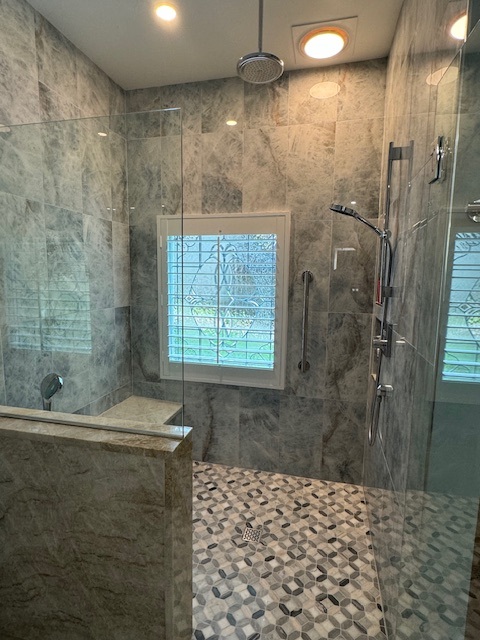
Highly durable with excellent wet traction when rated appropriately. Smaller formats (e.g., 2x2 mosaics) add grip via grout joints and work well in compact baths or showers.
Rubber Sheet or Tile
Soft underfoot, exceptional slip resistance, and quiet. Popular for family homes and spaces used by older adults; seams must be expertly detailed for waterproofing.
Waterproof LVT/LVP
Easy maintenance, warm feel, and realistic patterns. Choose embossed wear layers and bathroom-approved cores; confirm compatibility with underlayment and radiant heat.
Simone Feldman Designs provides detailed material guidance and installation planning so you understand how prep, membranes, and transitions affect overall investment.
Key Factors That Impact Slip-Resistant Performance
Several choices determine how safe a bathroom floor will feel day to day.
- DCOF/COF Ratings: Prioritize verified wet-performance ratings and finishes intended for barefoot areas.
- Tile Size and Grout: Smaller tiles create more grout lines, enhancing traction—especially on shower floors.
- Underlayment and Subfloor Prep: Uncoupling membranes and moisture barriers reduce movement and moisture wicking that can undermine finishes.
- Transitions and Thresholds: Low-profile transitions at doors reduce trip hazards while keeping water in the bath.
- Cleaning and Maintenance: Proper routines preserve surface texture and prevent soap film that can make floors slick.
Simone Feldman Designs helps you prioritize the specifications that matter most for your space, climate, and daily use.
Designing a High-Traction Bathroom Floor
A safer bathroom starts with materials, but it succeeds with details. In shower zones, we often specify small-format textured porcelain or pebbled mosaics with mold-resistant grout and a precise slope to drain. For main floor areas, embossed LVT or rubber offers a warm, forgiving surface with excellent wet grip.
Key upgrades include:
- Zero-threshold shower entries with continuous, slip-resistant tile
- Thoughtful grab bar placement to complement flooring safety
- Textured porcelain or rubber in high-splash zones
- Low-profile transitions at doorways to minimize tripping
- Balanced lighting and ventilation to control moisture and glare
When integrating radiant heat, we confirm compatibility with adhesives, membranes, and floor coverings to maintain traction and avoid damaging the system. For related solutions, see our Curbless Shower Design and Walk-In Shower Design for Seniors pages.
Care and Maintenance for Long-Lasting Traction
Keep floors grippy by removing soap scum and mineral buildup that can create slick films. Use neutral pH cleaners approved for your material, avoid waxes and polishes, and refresh grout lines with targeted scrubbing or steam as needed.
Recommended practices:
- Routine cleaning with non-film-forming products
- Periodic deep cleaning of grout and textured surfaces
- Checking caulk and seams to prevent moisture intrusion
- Using bath mats with non-slip backings that don’t trap water
- Scheduling inspections after heavy use or leaks
Simone Feldman Designs can develop a maintenance plan tailored to your flooring type, ensuring safe performance for years to come.
Working With Slip-Resistant Flooring Specialists
Bathrooms benefit from professionals who understand traction ratings, waterproofing assemblies, and real-world use. Our team coordinates DCOF targets, underlayment selection, and slope-to-drain execution so every layer supports safety.
We draw on industry standards and proven methods to integrate flooring with curbless showers, radiant heat, and proper transitions—without compromising style.
Simone Feldman Designs brings practical expertise to each project, delivering bathrooms that look refined and feel secure in daily use.
Slip-Resistant Bathroom Flooring Essentials
Selecting the right bathroom floor is about more than looks—it’s about traction where water, soap, and steam meet daily life. Simone helps homeowners choose slip-resistant bathroom flooring that balances safety, style, and maintenance.
Top safety-focused features include:
- High DCOF-rated, textured porcelain or ceramic tiles
- Rubber sheet or tile with built-in grip and cushioned feel
- Luxury vinyl (LVT/LVP) with embossed textures and waterproof cores
- Smaller tiles with more grout lines to increase underfoot traction
While these products can cost more than standard flooring, they offer long-term safety, durability, and easy care—key benefits for busy households and multigenerational homes.
Hidden Costs to Consider
Slip-resistant flooring projects can uncover conditions that affect budget and timeline, especially in older bathrooms.
Common hidden costs include:
- Subfloor repairs from past leaks or moisture damage
- Leveling or reframing for proper slope and drain transitions
- Upgraded waterproof underlayment or uncoupling membranes
- Ventilation improvements to control humidity and mold
Including a 10–20% contingency helps manage these findings while keeping the project on track.
Timeline for a Slip-Resistant Bathroom Flooring Project
The schedule varies by material choice, subfloor condition, and whether the bathroom remains in use during installation.
Typical phases include:
- Initial consultation and moisture assessment
- Design and material planning (DCOF targets, tile size, transitions)
- Product selection: porcelain, vinyl, or rubber systems
- Demolition, subfloor prep, waterproofing, and installation
- Final walkthrough, cleaning guidance, and traction testing
Smaller baths may finish in one to two weeks; complex retrofits or heated floors can extend the timeline.
Simone Feldman Designs coordinates each step for a smooth process and reliable results.
Long-Term Value and Everyday Confidence
Slip-resistant flooring adds daily peace of mind while enhancing bathroom durability and appeal. Thoughtful material selection and proper waterproofing protect your investment and can elevate resale interest.
Textured porcelain, LVT, or rubber surfaces paired with mold-resistant grout and quality transitions create a safer, more comfortable bath for everyone.
With the right system, homeowners gain a low-maintenance floor that manages moisture effectively and performs for years.
Why Choose Simone Feldman Designs?
Simone Feldman Designs specializes in traction-forward bathroom solutions that look beautiful and stand up to real life. Simone blends design expertise with technical know-how to recommend products that meet wet-area performance standards.
Her approach includes:
- Personalized consultations focused on safety and style
- Transparent estimates for materials, prep, and installation
- Specification of DCOF-tested tiles, vinyl, and rubber options
- Collaboration with installers skilled in waterproofing and transitions
- Detailed attention from subfloor prep through final clean
The result is a slip-resistant bathroom floor that’s functional, enduring, and design-forward.
Budgeting Tips for Slip-Resistant Bathroom Floors
A clear budget helps balance traction, aesthetics, and long-term maintenance.
- Invest first in safety-rated surfaces with proven wet DCOF values
- Plan for moisture control: membranes, mold-resistant grout, ventilation
- Allocate funds for subfloor repair and leveling if needed
- Set a contingency for hidden water damage
- Choose durable finishes that clean easily and retain traction
Simone Feldman Designs builds realistic budgets that prioritize safety, comfort, and longevity.
Cost-Saving Strategies
You can control costs without compromising grip or waterproofing.
- Target high-impact areas first: main bath, kids’ bath, and shower zone
- Phase upgrades: install floor now, add radiant heat or trim later
- Select textured porcelain or LVT lines with good value and warranties
- Keep layouts simple to reduce cuts and labor at thresholds
- Work with experienced bathroom flooring specialists
These choices deliver safer footing today and lower upkeep over time.
FAQs About Slip-Resistant Bathroom Flooring
Which bathroom flooring is best for traction?
Textured porcelain or ceramic tile with a suitable wet DCOF rating is a top choice, followed by rubber sheet/tile and waterproof LVT/LVP with embossed textures.
What DCOF number should I look for?
For wet areas, aim for products tested for wet dynamic coefficient of friction; many designers target ≥ 0.42 for tile in accordance with industry guidance. Always review manufacturer wet-use recommendations.
Do small tiles really help prevent slips?
Yes. Smaller tiles increase grout joints, which improve grip underfoot—especially helpful near tubs and showers.
Can I use heated floors with slip-resistant materials?
Typically yes. Radiant heat pairs well with many porcelain and LVT systems when installed per manufacturer specs with proper membranes and moisture management.
How do I maintain traction over time?
Clean routinely with pH-neutral cleaners, rinse away soap residue, and avoid waxes or polishes that create a slick film. Replace worn caulk and seal grout as recommended.
Plan a Safer Bathroom Floor with Confidence
Understanding DCOF ratings, tile sizing, materials, and waterproofing helps you choose a floor that performs in wet conditions and fits your style.
Simone Feldman Designs offers expert guidance, clear pricing, and tailored material specifications. By combining textured finishes, quality underlayment, and thoughtful transitions, Simone delivers bathroom floors that feel secure today and stand up to moisture for years.
Our Service Area
Simone Feldman Designs proudly provides Aging In Place design services for homeowners in Alpharetta, Johns Creek, Milton, and Roswell, GA and surrounding communities. With a thoughtful, safety-focused approach, Simone creates kitchens and bathrooms that support long-term comfort, accessibility, and independence without sacrificing style. Whether you’re planning ahead or adapting your current space, each design is tailored to fit your lifestyle and evolve with your needs—so you can remain confident and comfortable in your home for years to come.