Kitchen Pendant Lighting Guide
Brighten your kitchen with a pendant lighting plan crafted by Simone Feldman Designs. 40+ years of CKBD-certified design expertise guide fixture selection, mounting heights, spacing, and controls so every surface is beautifully illuminated.
Schedule your consultation today!
Expert Kitchen Pendant Lighting in Atlanta by Simone Feldman Designs
Kitchen pendants do more than decorate—they define work zones, deliver task light where you prep and plate, and set the mood for family meals and entertaining. At Simone Feldman Designs, we design beyond simple fixture swaps—every decision considers island length and seating, ceiling height and slope, beam spread, lumen output, color temperature, CRI, dimming, switching, junction box locations, and how you actually cook, gather, and clean up.
With more than 40 years of residential renovation experience, Simone brings award-winning judgment and construction-ready details to pendant lighting layouts in Roswell, Atlanta, and nearby communities. Her process blends precise field measurements, photometric targets, fixture specifications, and proactive coordination with electricians, carpenters, and fabricators to center pendants perfectly, route wiring cleanly, and deliver lighting that looks refined and performs flawlessly.
Why Kitchen Pendant Lights Work
Thoughtfully placed pendants concentrate light on islands, peninsulas, and sinks, reduce shadows, and visually connect the kitchen with adjacent rooms. Upfront planning of mounting heights, spacing, lumen levels, beam angles, dimming, and sightlines ensures lighting that is comfortable, code-aware, and timeless.
Good planning helps homeowners:
- Deliver bright, even task light over islands, peninsulas, and sinks with correct spacing, shade style, and mounting height
- Layer ambient, task, and accent lighting with dimmers and scene controls for cooking, homework, and entertaining
- Maintain safe circulation and clear views by choosing the right fixture scale and preserving head clearance above counters and seating
- Place junction boxes, switches, and smart controls where they’re most convenient while keeping ceilings clean with multi-port canopies or linear bars
- Avoid mid-project changes by finalizing fixture sizes, box locations, driver/dimmer compatibility, and ceiling work before drywall and cabinet installation
Simone's Credentials and Expertise
Successful pendant lighting demands precise measurements, accurate centering over islands, and deep knowledge of light levels, glare control, and electrical coordination. Simone Feldman is a deeply qualified designer who applies that rigor to every lighting plan, ensuring your pendants enhance function, flatter finishes, and support the way you live today—and adapt for tomorrow.
- Certified Kitchen Designer (CKD) and Certified Bath Designer (CBD) through the National Kitchen & Bath Association (NKBA)
- Certified Aging-in-Place Specialist (CAPS), focusing on accessible, future-proof design
- 40+ years of residential renovation experience since 1984
- Former Vice President of Educational Programs for the NKBA Georgia Chapter
- Specialty in architectural residential space planning, from concept design through construction drawings and job site supervision
These qualifications underpin Simone’s expertise in calculating target lumens and spacing, selecting the right CCT and CRI, coordinating dimming and control systems, aligning fixtures to architecture, and ensuring code-aware placement of junction boxes—details that make kitchen pendant lighting safe, comfortable, and beautiful.
How to Plan Kitchen Pendant Lighting
Designing and executing a kitchen pendant lighting scheme involves several key phases that Simone manages from start to finish:
- Consultation: Discuss how you cook and entertain, island size and seating, ceiling height and structure, daylight, and budget. Simone reviews windows, doorways, and sightlines to identify opportunities for a high-performing pendant layout.
- Design & Planning: Determine fixture styles and sizes, calculate lumen needs, set mounting heights and spacing, and produce lighting plans and elevations. Confirm switch locations, dimming approach, and driver compatibility; evaluate linear vs. multi-pendant options.
- Preparation: Verify ceiling framing and add blocking where needed, plan new circuits and box locations, and coordinate any drywall, electrical, or ventilation considerations to support the lighting design and meet code.
- Construction: Trusted trades complete rough-in wiring, box placement, and patching while Simone provides oversight, confirms centering and clearances, and coordinates timing with cabinetry, countertops, and appliance installation.
- Installation: Hang fixtures, set final heights, level canopies, aim shades for glare control, connect dimmers and smart controls, and test for flicker-free performance across the dimming range.
- Final Walkthrough: Simone verifies light levels, color consistency, beam coverage, switch logic, and finish quality, reviews care instructions, and ensures the lighting functions exactly as designed.
Most kitchen pendant lighting projects complete within two to six weeks once materials are on site, depending on scope, permitting, and field conditions.
Cost of Kitchen Pendant Lighting in Atlanta
Understanding pendant lighting costs in Atlanta helps set realistic expectations and choose where to invest. In 2026, most homeowners can expect the following ranges:
- Minor/Cosmetic Refresh: $650 – $2,500 (swap pendants using existing junction boxes, add quality LED lamps, install dimmers, minimal patch/paint)
- Mid-Range Remodel: $2,800 – $7,500 (add or relocate junction boxes for better centering, new decorative fixtures, smart dimmers/scenes, minor drywall/paint)
- High-End/Full Gut Renovation: $8,000 – $20,000+ (custom or designer fixtures, new circuits and controls, ceiling modifications or multi-port canopies, integrated drivers, extensive coordination)
On average, installed costs range from $200 to $1,500 per pendant fixture (including canopy and hardware), $60 to $200 per dimmer or smart switch, and market-rate labor for licensed electricians—figures influenced by ceiling height, wiring changes, fixture weight, finish level, and control-system complexity.
Simone provides transparent guidance on budgets and timelines during planning, helping you prioritize impact while staying aligned with your goals.
Best Pendants and Components for Kitchens
Selecting the right fixtures is critical when you’re layering light over islands, peninsulas, and sinks. Simone helps you balance glare control, scale, color quality, durability, and budget so your pendant lighting works hard and looks exceptional.
Top elements for Atlanta kitchens include:
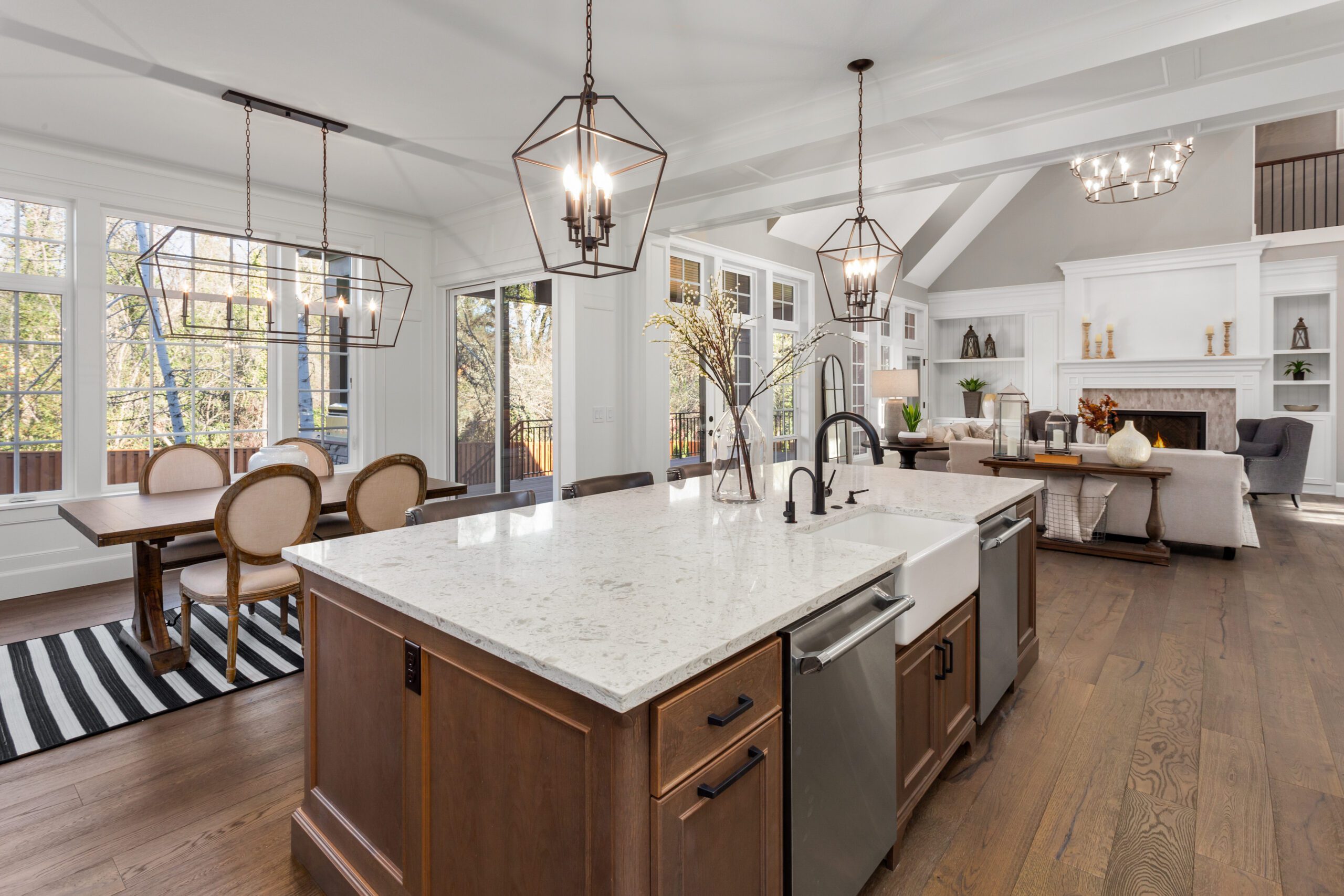
- Fixture Types & Scale: Choose domes, globes, lanterns, cones, or linear pendants sized to your island length and ceiling height; confirm canopy size and multi-light options for perfect centering.
- Light Source & Color Quality: Opt for high-CRI LED (90+), 2700–3000K for warm, food-friendly light; consider dim-to-warm modules for evening ambiance and consistent color across fixtures.
- Controls & Dimming: Pair fixtures with compatible dimmers (ELV/TRIAC/0–10V) or smart controls; create scenes for prep, dining, and cleanup to fine-tune mood and efficiency.
- Placement, Height & Spacing: Target 28–34 inches above the countertop and 24–30 inches between pendants; center over seating and prep zones to minimize shadows and glare.
- Mounting, Canopies & Ceilings: Use load-rated junction boxes, sloped-ceiling adapters, and multi-port canopies to reduce ceiling penetrations; coordinate finish caps and cord lengths for a tailored look.
Simone aligns fixtures and systems with your cooking habits, ceiling conditions, and maintenance preferences so your kitchen stays beautiful and easy to live with.
How to Choose Pendant Styles and Details
Thoughtful detailing is what makes kitchen pendants feel intentional. Simone guides you through shade opacity, metal finishes, proportions, and controls so the design is practical, safe, and refined.
Key factors to consider:
- Light Levels and Mounting Heights: Aim for 30–36 inches above the counter and about 25–35 lumens per square foot on prep areas; adjust for 8–10 foot ceilings and vaulted conditions.
- Spacing and Sightlines: Keep 24–30 inches between pendants and align with seating; preserve views to living spaces and avoid blocking artwork, windows, or range hoods.
- Electrical, Controls, and Compatibility: Map circuits, GFCI/AFCI where required, switch locations, and load types (ELV/TRIAC/0–10V); verify driver/dimmer compatibility to eliminate flicker.
- Island or Peninsula Strategy: Choose linear bars for long islands or clusters for compact peninsulas; maintain 42 inches or more of clearance around seating and prep zones.
- Windows, Openings, and Glare: Coordinate with natural light; select diffusers or shades that limit hotspots and reflections on glossy countertops.
- Budget Allocation: Expect fixtures and controls to consume a meaningful share of the budget; reserve funds for high-CRI light sources, quality dimmers, and professional installation where performance matters most.
Simone helps you balance aesthetics, safety, and cost so your pendant lighting elevates daily life from day one and adapts gracefully as your needs evolve.
How to Plan Kitchen Pendant Lighting
Well-chosen kitchen pendants elevate everyday cooking and gathering by delivering focused task light over islands and sinks while adding warm ambient glow to the whole room. Simone’s approach considers ceiling height and slope, junction box placement, fixture scale, lumen output, color temperature, dimming compatibility, and budget—so your lighting looks beautiful on day one and performs reliably for years.
Key considerations when planning kitchen pendants:
- Establish Your Budget: Account for fixtures, rated junction boxes, electrical labor, dimmers and smart controls, ceiling patch/paint, sloped-ceiling adapters, bulbs or LED modules, permits (as required), and professional installation—plus a contingency for plaster repairs or wiring surprises in older homes.
- Understand Pendant Types & Configurations:
- Mini Pendants: Ideal over peninsulas or narrow islands; use in multiples for even coverage. Mind stool placement, glare control, and maintain comfortable headroom and aisle widths.
- Linear Island Pendant: A single fixture with multiple lamps spreads light evenly across longer counters. Scale the length to the island, verify canopy size, and keep 42–48 inches of walking clearance around seating zones to prevent bumps.
- Multi-Light Cluster: Perfect for open-plan kitchens; clusters add drama without visual clutter. Plan lumen output, sightlines, and dimming to coordinate with recessed and under-cabinet lighting so the space feels balanced.
- Consider Timeline: In-stock fixtures and standard dimmers move faster; custom finishes, backordered models, and inspections can extend schedules 6–12+ weeks. Build in time for site measurements, electrician availability, deliveries, and final aiming/adjustments.
- Pay Attention to Clearances & Specs: Target 30–36 inches above the countertop (or 66–72 inches above finished floor) for most pendants; space multiples 24–30 inches apart; confirm beam spread, CRI, and lumens; and verify junction box locations, canopy coverage, driver placement, and dimmer type (ELV/MLV/0–10V) before ordering.
- Balance Style and Function: Choose shade materials that control glare (metal, frosted glass, fabric), coordinate finishes with hardware, and select color temperature (2700K–3000K) that flatters food and skin tones. Ensure fixtures are easy to clean in high-use zones.
- Quality Fabrication & Installation: Insist on properly rated boxes anchored to structure, straight canopies, level heights across multiples, tidy wiring, and dedicated dimmers for layered control—resulting in a refined look and long-term performance.
Simone helps clients test pendant sizes and spacing with scale drawings, confirm sightlines, map switch locations, and coordinate electricians so your lighting enhances efficiency, comfort, and style—without overspending.
Financing Options for Kitchen Pendant Lighting
Financing your lighting upgrade lets you replace dated fixtures, add circuits, and integrate dimming without draining savings. Atlanta homeowners commonly use:
- HELOC (Home Equity Line of Credit): Popular for lighting-centered updates, from adding island pendants to upgrading controls. Borrow against home equity with variable interest rates.
- Personal Loans: Unsecured loans up to $450,000 with fixed rates and no equity required. Rates typically range from 6.49% to 35.99% APR depending on credit profile.
- Cash-Out Refinance: Refinance for more than you owe and use proceeds for a comprehensive lighting refresh—best when interest rates are favorable.
- Contractor Financing: Some remodeling companies offer predictable monthly payments that can cover fixtures, dimmers, electrical work, and installation.
- Credit Cards: Suitable for smaller scope items like bulbs or a single pendant; be mindful of higher interest rates.
Current renovation financing rates in Georgia run anywhere from 6.5% to 14.85% APR, depending on loan type and credit profile. Simone can help you understand how different financing options align with your lighting goals, phasing strategy, and overall kitchen scope.
Kitchen Pendant Lighting Mistakes to Avoid
Preventing common lighting missteps saves time, money, and glare-induced headaches. Simone’s experience highlights these issues to watch for:
- Skipping Professional Planning: DIY placements often ignore height guidelines, lumen needs, driver/dimmer compatibility, and code. A certified designer ensures safe clearances, even light distribution, and compliant wiring.
- Underestimating Utilities & Structure: Adding pendants can require new junction boxes, blocking for support, circuit capacity checks, or ceiling repair. Validate feasibility early to keep budgets realistic.
- Choosing Trends Over Timelessness: Statement fixtures that fight the architecture can date quickly. Select silhouettes, finishes, and color temperature that complement your home’s style.
- Ignoring Glare & Sightlines: Clear glass without diffusers can create hotspots and visible bulbs. Layer task, ambient, and accent lighting and align pendants to preserve views to windows and living areas.
- Uneven Spacing & Edge Fixtures: Crowded ends and irregular gaps cause dark patches and visual imbalance. Plan counts, spacing, and centering over the island before rough-in.
- Not Planning for Heat, Ventilation & Care: Pendants too close to a range, long greasy runs, or hard-to-clean finishes lead to maintenance issues. Specify proper clearances, durable materials, and easy-clean surfaces.
Simone’s thorough design and coordination process—from lighting layouts and Kelvin tests to field verification—helps you sidestep these mistakes and achieve pendants that feel intentional, ergonomic, and built to last.
What Clients Say About Simone's Kitchen Pendant Lighting
Across Atlanta, Simone Feldman Designs is known for layered lighting plans that are as functional as they are beautiful—especially when it comes to kitchen pendants. Clients praise Simone’s clear communication, realistic timelines, and hands-on guidance from concept and measurements through electrician coordination and final aiming.
On Houzz, Simone Feldman Designs is noted as a full-service residential kitchen and bath design firm offering 3D renderings, reflected ceiling plans, fixture schedules, photometric guidance, dimming/control specifications, project management, and construction drawings. Expertise includes architectural lighting planning, universal design, and sustainable specifications that keep kitchens bright, efficient, and future-ready.
Homeowners value Simone’s ability to translate inspiration into practical lighting layers—right-sizing pendants, selecting Kelvin and CRI, spacing fixtures evenly, and coordinating with trades—so the finished kitchen feels intentional and performs day after day.
Kitchen Pendant Lighting Ideas
Choosing the right pendant size, quantity, and shade opacity shapes task performance, mood, and sightlines. Simone helps you balance aesthetics with illumination needs and budget to create a lighting plan that works as beautifully as it looks.
Popular kitchen pendant approaches include:
- Scale and Quantity: Use proportion rules to size fixtures to your island and select an odd number for visual rhythm—then fine-tune spacing for even light.
- Linear vs Multi-Light: A linear bar simplifies alignment on long islands, while multiple small pendants add texture and flexibility.
- Shade Materials: Metal shades eliminate glare and direct light down; frosted or ribbed glass softens hotspots; fabric adds warmth.
- Finish Coordination: Tie pendants to hardware and faucets, or mix metals intentionally—think matte black with warm brass accents.
- Glass vs Opaque: Clear glass maximizes brightness but can expose bulbs; opal or linen diffusers create glow and hide light sources.
For smaller kitchens, petite pendants or a single linear fixture preserve openness without sacrificing task light. Simone uses 3D imaging and elevations to test heights, beam spreads, and glare before anything is ordered.
Pendant Lighting Details & Technical Considerations
Great looks start with precise technical planning. Simone guides clients on electrical loads, dimmer compatibility (ELV/MLV/0–10V), driver access for integrated LEDs, junction box placement, and ceiling conditions so installation is smooth and code-compliant.
Key details to plan include:
- Clearances & Aisles: Target 30–36 inches above countertops (66–72 inches AFF), confirm bar-stool headroom, and maintain clear walkways beneath fixtures.
- Ceilings & Appliances: Address sloped or vaulted ceilings with appropriate adapters, avoid range heat zones, and prevent fixture collisions with upper doors or hoods.
- Switching, Dimming & Code: Coordinate GFCI/AFCI where required, provide dedicated small-appliance circuits separately from lighting, and specify dimmers matched to the driver.
- Heat, Cleaning & Longevity: Keep safe distances from cooktops, select wipeable finishes, and favor high-CRI, long-life LEDs for consistent color rendering.
In compact kitchens, layered switching, scaled fixtures, and thoughtful spacing enhance brightness and keep the room feeling open and uncluttered.
Kitchen Pendant Lighting Tips
Simone’s decades of kitchen design experience inform these practical tips for a successful pendant plan:
- Measure and model first: Scaled elevations and templates reveal conflicts early, validate heights and spacing, and confirm lumen targets for tasks.
- Hire qualified installers: Use properly rated junction boxes, level every fixture, and verify dimmer/driver compatibility for flicker-free performance.
- Prioritize light coverage: Balance pendants with recessed and under-cabinet lighting to avoid shadows at prep zones.
- Plan sightlines: Reduce glare with diffusers and correct mounting heights, and align fixtures with windows or focal points.
- Think long-term: Choose durable finishes, field-replaceable LEDs or standard sockets, and leave a few extra links/rods for future adjustments.
- Work with a certified designer: A CKBD-certified pro like Simone ensures safety, ergonomics, and performance details aren’t missed.
Kitchen Pendant Lighting Planning Resources
To help you make confident pendant decisions, Simone Feldman Designs offers in-depth guides that also inform broader kitchen choices. These resources clarify budgets, timelines, surface selections, and layout factors that influence pendant quantity, scale, and placement:
- How Much Does a Kitchen Remodel Cost in Atlanta?
- What Is the Most Expensive Part of a Kitchen Remodel?
- How Long Does a Kitchen Remodel Take?
- Should I Replace Cabinets or Reface Them?
- Is Quartz Better Than Granite?
- Best Countertops for Busy Families
- Best Kitchen Layouts
- Kitchen Remodel ROI
- Kitchen Trends for 2026
- Open Concept vs Traditional Kitchens
These articles complement your pendant planning, giving you the context to make smart choices with Simone’s expert guidance—whether you’re centering lights over an island, illuminating a peninsula, or coordinating finishes with your cabinetry and counters.
Frequently Asked Questions
How long does planning kitchen pendant lighting take?
The planning phase typically takes two to four weeks, depending on fixture selections, ceiling/wiring changes, and product lead times. Simone uses reflected ceiling plans, 3D elevations, and lighting mock-ups to finalize heights, spacing, and dimming efficiently.
Does Simone handle permits and construction coordination?
Yes. Many lighting updates require electrical permits or inspections. Simone manages coordination—scheduling electricians, confirming code compliance, verifying junction box locations, and reviewing site conditions—so installation is seamless.
Can Simone help with aging-in-place or accessibility features?
Absolutely. Simone recommends higher CRI for better visibility, anti-glare diffusers, intuitive dimmers, motion or night lighting near pathways, and thoughtful switch heights to support safe movement and long-term comfort.
What if I'm not sure about my style or material choices?
Simone clarifies the pros and cons of clear vs frosted glass, metal vs fabric shades, color temperature (2700K vs 3000K), and finish coordination—helping you balance appearance, glare control, cleaning, and cost for a look you’ll love.
How involved is Simone during construction?
Simone stays closely involved—verifying rough-in heights and centering, reviewing fixture spacing, confirming dimmer/driver compatibility, and visiting the job site to ensure the installation matches the approved lighting plan.
Start Planning Your Kitchen Pendant Lighting
Thoughtful pendants define zones, brighten prep work, and create inviting ambiance for everyday meals and entertaining. With Simone Feldman’s 40+ years of experience, CKBD/CBD certification, and construction-savvy approach, you’ll get expert guidance on fixture selection, scale and spacing, dimming and controls, color temperature, electrical coordination, and finishes that look stunning and last.
Now accepting new clients in Roswell, Alpharetta, Johns Creek, Milton, and surrounding Atlanta communities. Call Simone Feldman Designs today at (404) 386-9487 or email simonef_ckdcbd@comcast.net to schedule your consultation.